The advent of high-tech gadgets has transformed the educational landscape, ushering in an era where learning extends beyond the walls of the classroom. Tablets, laptops, and online learning platforms have not only diversified teaching methods but also made information more accessible. This technological revolution raises essential questions about its impact on student engagement, equity in access to education, and teachers’ preparedness to effectively integrate these tools into their curriculum. Exploring these dimensions is crucial to understanding how these innovations are shaping the future of education.
Impact of High-Tech Gadgets on Teaching Methods
The integration of high-tech gadgets into teaching fundamentally alters pedagogical strategies. Education, a field traditionally governed by recitation and handwriting, is transforming under the influence of new technologies. Blackboards, remnants of a bygone era, are giving way to digital and interactive whiteboards, which allow for multimodal interaction and active participation from learners.
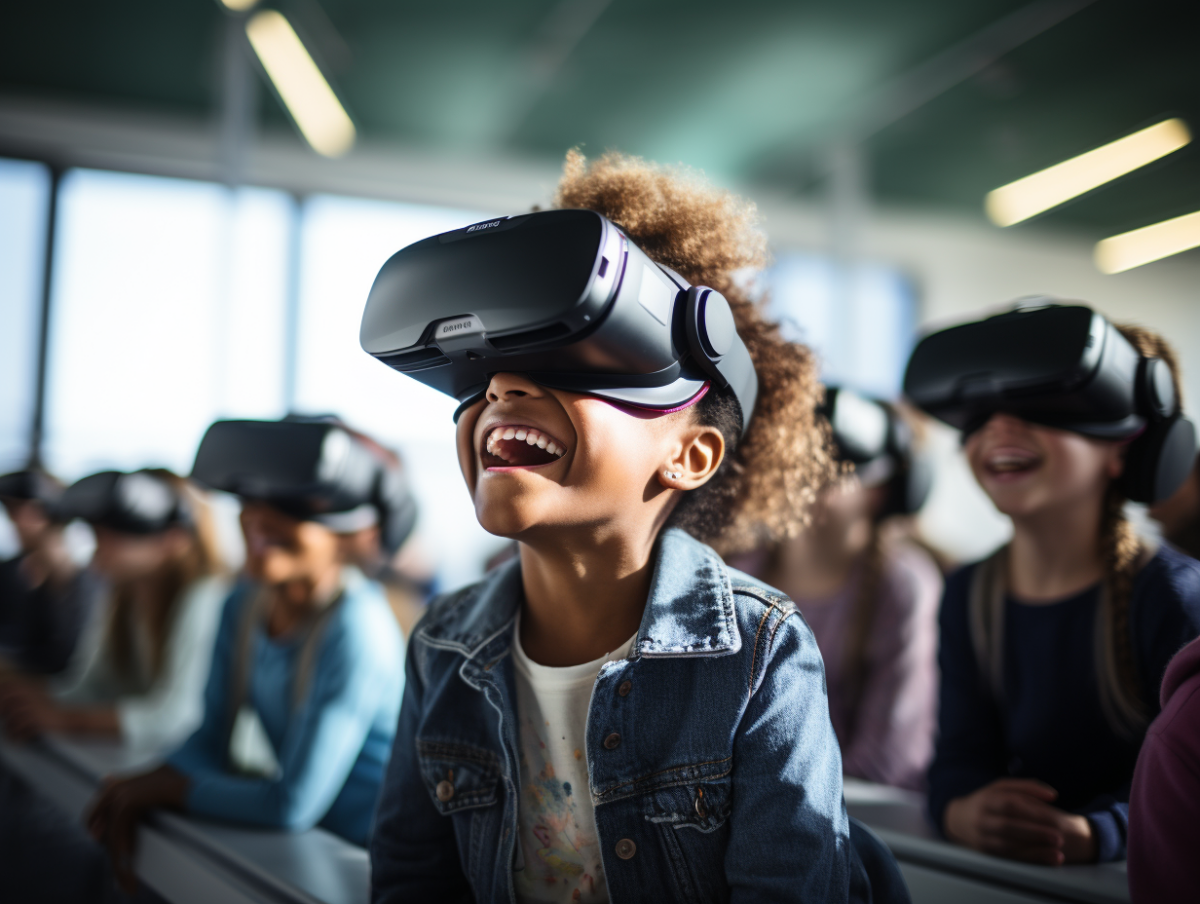
With the emergence of virtual reality, a field of exploration opens up for educators. Historical events, once confined to books and narratives, come to life before students’ eyes, offering them an unprecedented immersion. The technology news magazine, EV Mag, reports that this technological innovation provides an enriched learning experience, likely to enhance retention and understanding of educational content.
The use of these tools also disrupts traditional practices such as note-taking. Considered vital for understanding and memorization, this activity is affected by devices that prioritize observation and direct experience. Current research questions the need to reinvent this skill to adapt it to the digital age, in order to maintain its role in the learning process.
In the face of the democratization of the digital school, connected objects are becoming essential vectors for knowledge transmission. Technology in education is no longer just an auxiliary but a key player, redefining the interaction between teachers and students. The central question remains the alignment between these tools and pedagogical objectives, so that technological innovation truly serves educational interests.

The Challenges and Perspectives of Technological Integration in Education
The field of education is venturing into an era of unprecedented innovation, where the challenges of technological integration intertwine with prospects for pedagogical renewal. Microsoft, a renowned player in the tech sector, has noted the positive impact of augmented reality on training effectiveness. This finding raises questions about the ability of institutions to integrate these tools without compromising the quality of teaching.
The arrival of the Apple Vision Pro heralds a major evolution in the field of virtual reality headsets. Promising unprecedented user comfort, this equipment could well become the new standard for educational immersion. However, this raises the question of access to these cutting-edge technologies in institutions with limited resources.
The collaboration between Peter Der Manuelian and Harvard University illustrates another facet of the technological future in education. The Kheops Horizon project, which aims to recreate the environment of ancient Egypt, demonstrates the convergence of academic knowledge and pedagogical innovations. This type of initiative suggests an evolution of university curricula, which could integrate immersive experiences as an integral part of their program.
Technological perspectives must be approached with discernment. The technological integration in education is not limited to the possession of advanced tools; it involves reflection on pedagogy, teacher training, and adaptation of curricula. The digital transformation of the educational system must be considered in terms of accessibility, equity, and educational relevance, so that technology becomes a lever for success for all.