
A bomb threat triggers a specific security protocol, codified by the Vigipirate plan and local prefectural instructions. In Cannes, where the Palais des Festivals gathers several thousand people during major events, this type of incident simultaneously mobilizes the national police, bomb disposal units, and municipal services according to a strict chain of command.
Security perimeter and role of bomb disposal units during a bomb threat
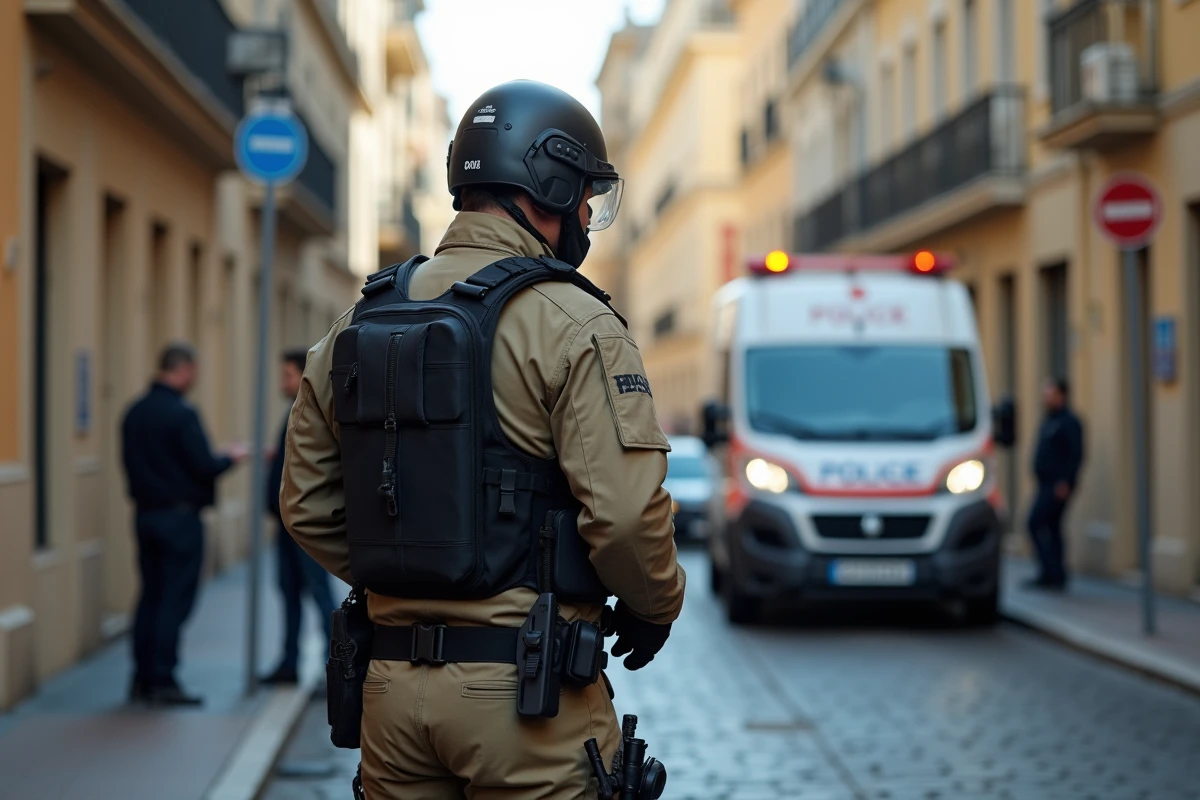
When a suspicious package is reported in a public place, the first measure is to establish a security perimeter. This perimeter is defined by the law enforcement present on-site, in coordination with the police station or the departmental directorate of public security.
The bomb disposal units, attached to Civil Security, then intervene to analyze the object. Their protocol relies on a visual inspection, sometimes supplemented by a remote-controlled robot capable of X-raying the package without direct human intervention. No alert can be lifted before their formal diagnosis.
To better understand the factual developments and official statements, an article details the bomb threat in Cannes on Scoopium with reactions from the prefecture and the town hall.
The duration of a bomb disposal intervention varies depending on the complexity of the situation. In the case of the Palais des Festivals in Cannes, the confinement of access lasted part of the afternoon before the alert was lifted and activities resumed.

Bomb threat in Cannes: the decision-making chain between the prefecture and town hall
The management of a bomb threat involves two distinct levels of authority. The prefecture of Alpes-Maritimes coordinates the intervention of police forces and specialized services. The town hall of Cannes, on its part, manages local communication and logistical support (traffic diversion, informing residents, welcoming evacuated persons).
This division of roles follows the framework of the Vigipirate system, which assigns operational responsibility for public safety to the state while allowing local authorities to manage proximity issues.
Coordination between national police and municipal police
The national police take operational command as soon as a threat is qualified. The municipal police of Cannes then play a supporting role: marking the perimeter, directing the public, assisting vulnerable individuals.
- The national police lead evacuation operations and secure access around the affected area
- The bomb disposal units from Civil Security inspect and diagnose the suspicious package
- The municipal police manage traffic, inform passersby, and coordinate with town hall services
- The prefecture centralizes official communications and decides on lifting the alert
This coordination avoids overlapping command and ensures that each service operates within its area of competence.
Consequences of an evacuation of the Palais des Festivals in Cannes
Temporarily closing the Palais des Festivals during an event like the Cannes Film Festival disrupts the ongoing programming. Screenings, press conferences, and red carpet events scheduled during the evacuation window are suspended until reopening.
Organizers have no leeway in the face of a prefectural decision to confine. The festival schedule is then adjusted, with delays or cancellations depending on the duration of the interruption and logistical constraints.
Impact on the public and professionals present
Festival-goers and accredited individuals find themselves blocked outside the perimeter, sometimes without immediate information on the duration of the wait. The festival’s private security teams must then manage flows of people in a constrained urban space, with the Croisette offering few fallback areas for several thousand visitors simultaneously.
Film industry professionals (distributors, journalists, filming crews) see their appointments postponed, which can affect business negotiations or media coverage of competing films.
Legal framework for bomb threats and preventive measures
The Vigipirate plan defines several levels of security posture applicable to large-scale events. The highest level, activated during confirmed threats, allows for enhanced measures: systematic searches, access restrictions, deployment of military resources in support of police forces.
False bomb threats constitute a criminal offense. The law severely punishes anyone who communicates false information likely to provoke the intervention of emergency or security services.
Preventive measures deployed at the Cannes Film Festival
The Cannes Film Festival is subject to a specific security arrangement each year, combining several means:
- Surveillance cameras covering the entire perimeter of the Palais des Festivals and the Croisette
- Enhanced access controls with detection gates and bag searches
- A visible police presence, supplemented by plainclothes officers to detect suspicious behavior
This security arrangement is recalibrated each year based on the threat level assessed by intelligence services. Bomb threats, whether founded or not, contribute to this ongoing reevaluation of preventive measures.
The management of the bomb threat at the Palais des Festivals illustrates a well-oiled but never routine mechanism. Each incident forces authorities to adapt their response to the specific context, considering crowd density, venue configuration, and the current threat level.