Creating a suitable environment for a land turtle is essential for its well-being. These reptiles, often adopted as pets, require specific conditions to thrive. Their needs for space, heat, light, and food differ significantly from those of other domestic animals. Owners must be informed about the natural habitat characteristics of these creatures to replicate a similar living environment in their home. The setup should also consider the safety and comfort of the turtle while facilitating daily care for the caregivers.
Creating an Optimal Habitat for Land Turtles
The construction of a house for a land turtle begins with choosing the habitat. For juveniles or small specimens, a turtle terrarium is suitable. This terrarium must be properly ventilated and sized according to the turtle’s needs, to support its growth without hindering its movements. The substrate, crucial for its health, should be chosen carefully: it must retain moisture while avoiding being too fine to prevent potential digestion issues.
Lighting is another pillar in the habitat setup. The UV-B lamp is a key component, especially during the winter months when natural light is insufficient. It plays a fundamental role in calcium absorption and the synthesis of vitamins necessary for your land turtle’s shell and bones. Ensure that the terrarium is equipped with such a light source, respecting the natural day and night cycles.
The turtle’s living space should be thought of as a miniature ecosystem. The temperature and humidity must be regulated to closely mimic the natural conditions of the species. Special attention is given to the arrangement of warm and cool areas, allowing the turtle to thermoregulate according to its needs. Enriching the environment by adding hiding spots or plants will also stimulate the turtle, contributing to its physical and mental well-being.
Managing the Turtle’s Environment for Its Health and Well-Being
Maintaining an enclosure or terrarium for land turtles goes far beyond mere comfort. The health of the turtle entirely depends on the quality of its environment. The temperature must be meticulously controlled and adapted to the specific needs of the species. Each turtle requires precise thermal conditions to optimize its metabolism and physiological functions.
<Hibernation is a particular aspect of the life of land turtles, which may or may not be necessary depending on the species in question. If hibernation is an unavoidable step for your pet, maintaining the appropriate temperature range, between 0 and 5 °C, is essential to replicate a natural state of lethargy. Take the necessary measures to create a secure and stable environment that will support this crucial resting period for their annual cycle.
The well-being of land turtles also involves managing lighting. Natural light is ideal but not always sufficient, especially in captivity. Providing suitable turtle lighting, particularly UV-B lamps, is fundamental for calcium absorption and preventing rickets. Ensure to simulate a consistent solar cycle with periods of light and darkness to maintain your animal’s physiological balance.
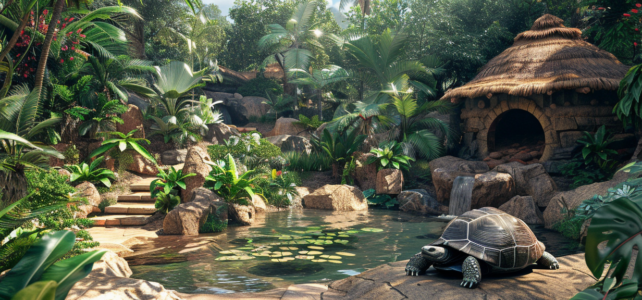
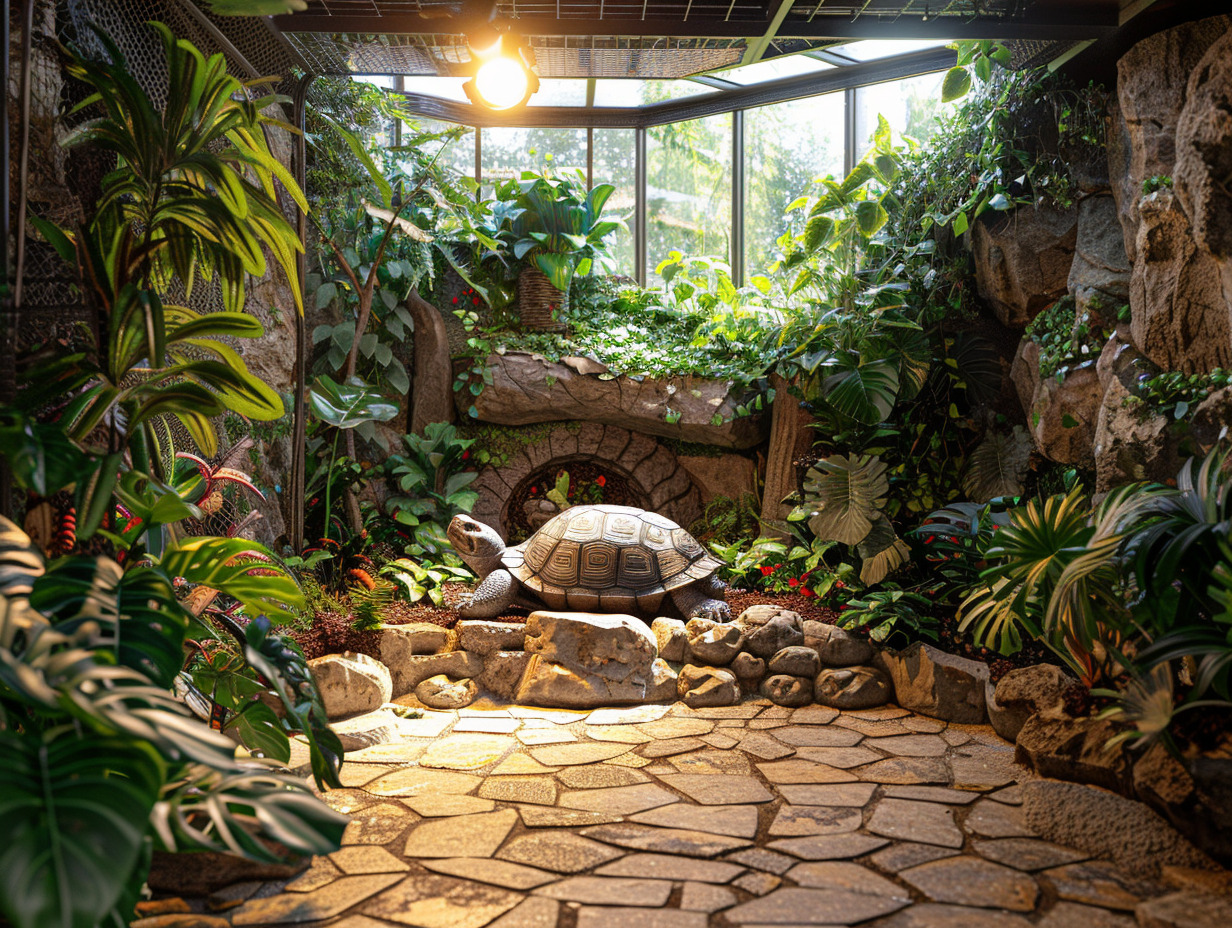
The setup of the turtle enclosure should encourage exploration and exercise. Vary the landscape with natural elements such as rocks, non-toxic plants, and areas of loose soil to allow them to dig. This type of enriched environment stimulates their curiosity and enhances their physical condition while mimicking their natural habitat. Paying special attention to these details ensures a healthy and fulfilling life for your land turtle.