
Immersed in French history, Nantes remains a city with a complex and rich identity shaped by centuries of political and cultural changes. Its strategic position on the Loire has made it a hub of trade and power since antiquity, and its heritage as an integral part of Brittany is still deeply felt today. Nantes’ journey, from its Celtic roots to its role in modern French history, offers a fascinating blend of history, culture, and identity that continues to spark lively debates and interest.
Nantes: A City of Breton Origin
If we delve deeper into Nantes’ past, it becomes clear that the city enjoys a unique cultural identity where various heritages intertwine. One of the most striking aspects is undoubtedly its historical belonging to Brittany, a fact that has largely shaped its history and personality.
Initially under Roman rule before asserting itself as an independent city, Nantes joined the Breton kingdom in the early 6th century, eventually integrating into the Kingdom of France during the Middle Ages. It was during this period that it was officially considered an integral part of Brittany—a true golden age for what would soon establish itself as a major economic center thanks to its prosperous port.
Even today, this link between Nantes and Brittany remains deeply rooted in the minds of the inhabitants. Even though administratively it has not belonged to this region since the 1950s, ‘Nantes Brittany’ remains an omnipresent cultural reality.
Whether through traditional celebrations such as the Feast of Saint-Yves or simply through the daily use of Gallo (a Romance language spoken in Upper Brittany), these living witnesses pay tribute to the Breton roots deeply embedded in the Nantes soul.
The architectural heritage is also imbued with this legacy, as evidenced by the Château des Ducs de Bretagne. Once the main residence of the Dukes of Brittany, it is now a museum housing a rich collection dedicated to the history of Nantes and the Breton territory.
‘Nantes Brittany’ is more than just a geographical designation: it is a shared history, a unique cultural blend, and a pride that endures through the centuries. Despite administrative and political changes, the city continues to proudly uphold its Breton colors.
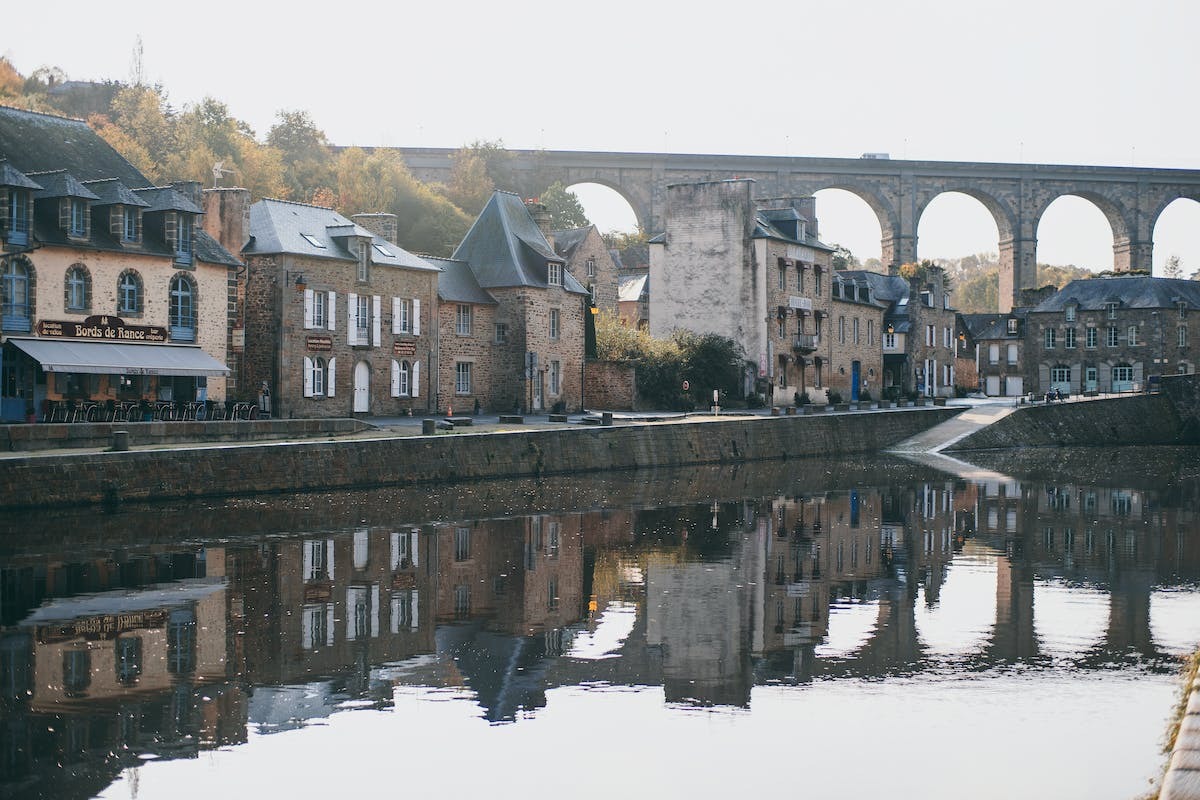
The Centuries-Long Evolution of Nantes
The evolution of Nantes over the centuries has been marked by a series of transformations that have shaped its urban landscape and reinforced its position as a major economic hub. In the Middle Ages, the city prospered thanks to its strategically located river port on the banks of the Loire. It was during this time that Nantes became an important commercial and industrial center, attracting merchants and artisans from all corners of the world.
During the Renaissance, Nantes experienced a prosperous period under the reign of the Dukes of Brittany. Iconic buildings such as the Château des Ducs de Bretagne and the Saint-Pierre-et-Saint-Paul Cathedral were erected, reflecting the city’s growing prestige.
Nantes’ tumultuous history took a dark turn with the introduction of the triangular trade in the 17th century. The slave trade then became an integral part of the thriving commerce in which the city actively engaged. The quays of Nantes thus became the central point for the embarkation of African slaves to French colonies.
The 18th century marked a decisive turning point for Nantes with the advent of industrialization. Port activity developed significantly, particularly through import-export and shipbuilding. The city also thrived in the textile sector with the emergence of the first factories.
This period also saw the birth of some iconic monuments that characterize today’s urban landscape of Nantes. The Graslin Theatre, for example, was built in the 18th century and remains a must-visit cultural venue.
Throughout the 19th century, the industrial revolution profoundly transformed Nantes and its region. Industries diversified, particularly with the rise of mechanical engineering and shipbuilding. The city then became an important industrial center in northwestern France.
Despite the destruction caused by World War II, Nantes quickly rebuilt itself to regain its economic dynamism. It invested in modernized infrastructures such as the transporter bridge and high-rise apartment buildings, giving it a new architectural look.
Today, Nantes is recognized as a modern and dynamic metropolis that has managed to preserve its heritage while looking towards the future. Innovative projects such as the development of the banks of the Loire and the promotion of renewable energies testify to this constant desire for evolution and adaptation to contemporary challenges.
The evolution of Nantes over the centuries is thus inextricably linked to its Breton roots, but also to its ability to adapt to socio-economic changes in order to remain a prosperous and attractive city for its residents as well as for visitors from around the world.
Nantes Architecture Marked by Brittany
The Breton influences in Nantes architecture are undeniable and reflect the cultural richness that has traversed the centuries. The city’s religious buildings, such as the Saint-Pierre-et-Saint-Paul Cathedral, showcase architectural elements typical of Breton Gothic art, such as pointed arches and ribbed vaults.
The Château des Ducs de Bretagne is another remarkable example where the Breton influence is felt. Its construction dates back to the 15th century and fits within the characteristic architectural style of fortified castles in Brittany. The massive towers, the imposing keep, and the moats echo the medieval fortresses of the country.
The half-timbered houses are also very present in the historic center of Nantes. This traditional technique involves assembling wooden beams to form a solid structure while allowing great creative freedom in the sculpted ornaments on the facades. These timber-framed houses undoubtedly recall the regional Breton architecture.
Walking through the cobbled streets of the Bouffay district or the Passage Pommeraye, it is impossible not to be struck by this particular atmosphere that harmoniously blends past and modernity. Certainly influenced by its Breton roots, this picturesque architecture gives Nantes a unique charm.
But the influence did not stop at the Middle Ages or the Renaissance. Even today, one can observe borrowings from Breton architecture in the new buildings of the city.
Notable Nantes Personalities of Breton Origin
In the history of Nantes, several personalities of Breton origin have left their mark on the city. Among them is Anne of Brittany, an exceptional woman who was queen consort of France twice in the 15th century. Born in Nantes in 1477, she played a key role in the unification of Breton lands with the French kingdom. Her political and cultural influence is still felt today through the many castles and monuments she had erected in the region.
Another famous figure is Duchess Anne (or Jeanne), also a member of the family of the Dukes of Brittany. She was known for her fierce resistance to King Louis XI’s claims on the Breton duchy. Her unwavering will earned her the nickname ‘the tigress’. Her courage and attachment to her homeland made her an undeniable regional icon.
Among artists, Jules Verne, the world-renowned visionary writer, was originally from Nantes through his parents who were Bretons. This prolific author fascinated the world with his fantastic tales anticipating avant-garde technologies such as submarines and space travel.
We must not forget Marc Elder (1862-19), a Nantes writer steeped in Breton culture, which he drew upon to write many of his novels. His work, imbued with poetry and authenticity, captivated readers with its heightened sensitivity.
It is thanks to these historical Nantes personalities of Breton origin that the city has been able to forge its unique identity and preserve its Breton cultural roots over time. Their legacy continues to influence the architectural, literary, and artistic heritage of Nantes, allowing future generations to connect with their glorious past.
Living Breton Traditions in Nantes
The city of Nantes, steeped in Breton heritage, proudly perpetuates the ancestral traditions and customs that have shaped its cultural identity. Among these traditions are Breton dance, a true art of living characterized by swaying steps and colorful traditional costumes. The Nantes folk groups regularly perform at festivals or local events, offering an enchanting spectacle where the popular Breton tunes resonate.
Musical folklore is also very present in Nantes. Traditional Celtic music is passionately expressed through the enchanting sounds of the biniou (a Breton bagpipe) accompanied by the drum called bombarde. These emblematic instruments create a festive and friendly atmosphere during fest-noz (night parties) that bring together young and old around an authentic ambiance.
The religious festivals also hold an important place in Nantes’ social life. The Feast of Saint-Yves, the patron saint of Bretons, is celebrated each year on May 19. It pays tribute to the fight for justice led by this lawyer, a fervent defender of the underprivileged in the 15th century. This festive day is marked by religious processions as well as folk concerts and other artistic activities.
The Breton gastronomic heritage holds a special place on Nantes’ plates. Culinary specialties such as the famous crêpes, both savory and sweet, or the delicious kouign-amann, delight the taste buds of residents and visitors in search of authenticity.
The Breton language is also preserved in Nantes thanks to the efforts of various socio-cultural organizations that offer courses and workshops to learn this regional language with its unique sounds. This desire to preserve the Breton linguistic heritage reflects the deep attachment of the people of Nantes to their cultural heritage.
Preserving Nantes’ Breton Roots
The importance of preserving Nantes’ Breton roots goes beyond just preserving a cultural heritage. Indeed, this valorization also contributes to strengthening the sense of belonging of the inhabitants to their city and promotes intergenerational dialogue.
By preserving Breton traditions, Nantes positions itself as a city open to its history and aware of the importance of maintaining its roots. This approach allows the people of Nantes to reconnect with their ancestors and better understand their collective identity.
This attachment to Breton culture generates a true economic dynamism for the city. Traditional events such as folk festivals or Breton concerts attract thousands of visitors each year in search of an authentic experience. They thus contribute to the development of local tourism and actively participate in the Nantes economy.
The political will in favor of the promotion of Breton roots has resulted in concrete actions such as the creation of bilingual schools and financial support for associations working to maintain regional traditions.
It should be noted that this preservation should not be perceived as an identity retreat but rather as a common wealth that brings all inhabitants together around a shared regional pride. Openness to others and mutual enrichment are at the very heart of the values upheld by these cultural initiatives.
Preserving Nantes’ Breton roots is of paramount importance for the city. It not only allows for the perpetuation of a rich and diverse cultural heritage but also strengthens the sense of belonging of the inhabitants to their territory. This valorization also contributes to the local economic dynamism by attracting numerous visitors each year eager to discover a unique and authentic culture. Nantes thus continues its journey through history, guided by the swaying steps and lively melodies that have made the Breton heart beat for centuries.