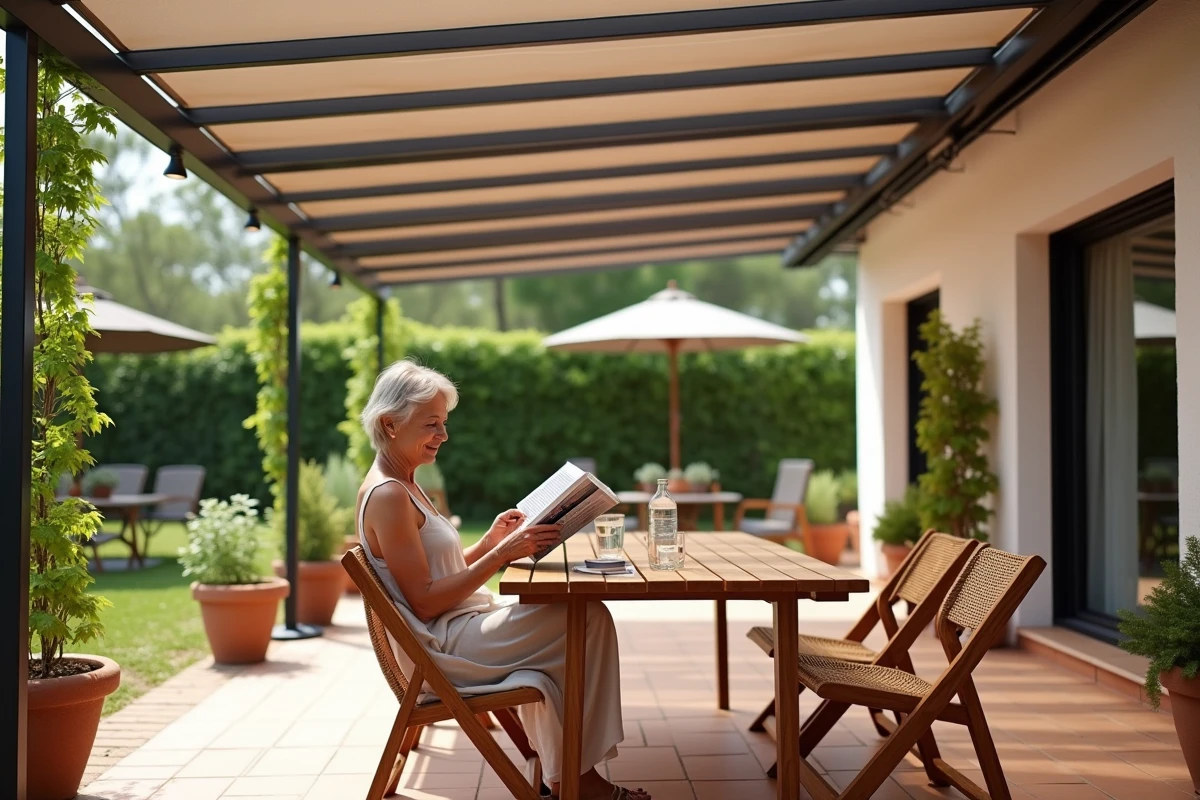
Polycarbonate lets light through, protects from rain, and resists impacts. However, as soon as the sun shines strongly, the temperature under a pergola covered with this material rises quickly. Making a polycarbonate pergola heat-resistant requires acting on several levers, from the choice of the panel itself to the additional protections installed above or below the roofing.
Infrared-filtering polycarbonate panels: the underestimated technical option
Most content on the subject contrasts clear polycarbonate with opal polycarbonate, as if the choice were limited to these two options. Since 2023-2024, manufacturers have been offering panels that incorporate pigments or reflective layers that selectively filter the infrared spectrum. Visible radiation passes through, while heat is largely reflected.
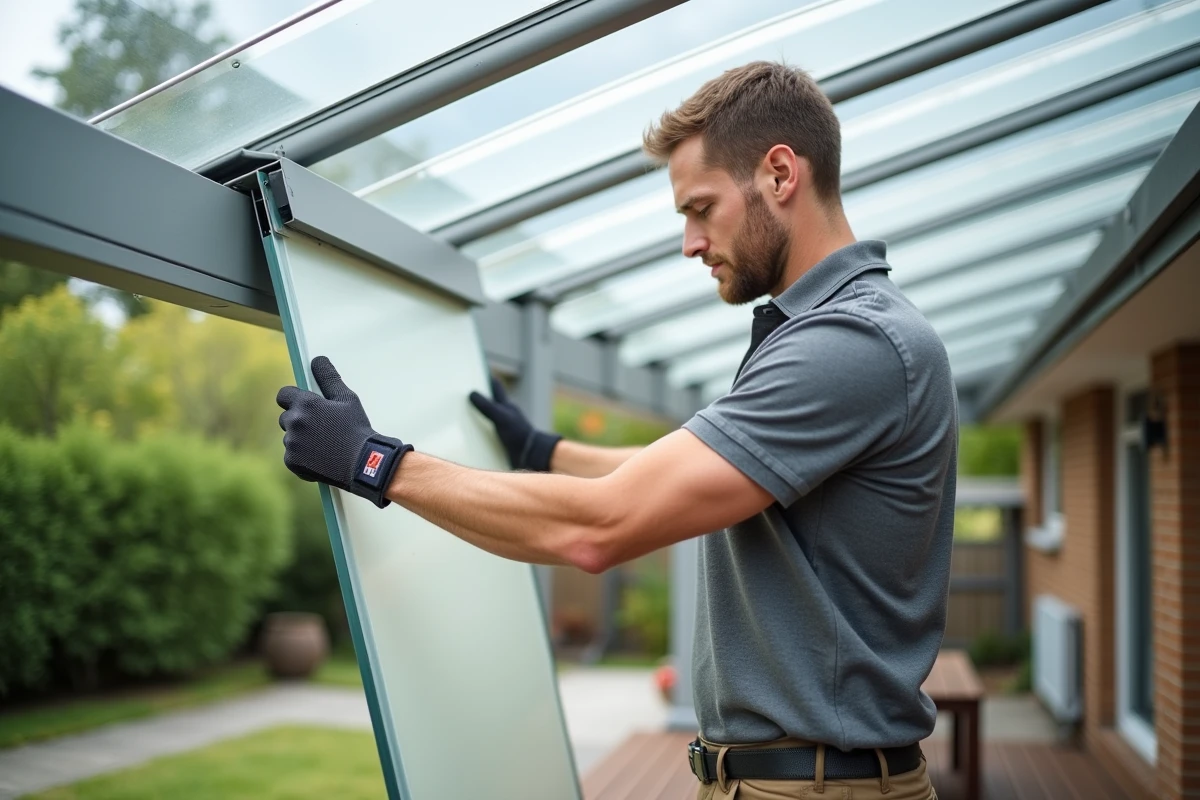
Among these products, the “IQ-Relax” panels (Arla Plast / Polycasa) are designed for pergola and veranda roofing. Their principle is based on a selective filtering of the solar spectrum: they reduce the temperature rise under the roofing while maintaining adequate brightness. This type of panel represents a qualitative leap compared to classic hollow polycarbonate, even in bronze or opal tint.
For those looking to achieve an effective heat-resistant polycarbonate pergola, these next-generation panels deserve to be compared to simply replacing them with thicker polycarbonate, which improves thermal insulation without reducing radiative heat transmission as much.
Field feedback varies on this point: some users report a noticeable difference from the first hot days, while others believe the gain is insufficient without additional protection. Polycarbonate alone, even if filtering, is not always enough in a Mediterranean climate or during prolonged heatwaves.
External or internal solar protection: what technical guides say
Installing a shade or awning under the pergola seems logical. However, it is the least effective solution. Solar radiation passes through the polycarbonate, hits the interior awning, and heat remains trapped between the roofing and the fabric.
The recommendations from CSTB and AICVF (technical guides updated between 2021 and 2023 on summer comfort) are clear: external solar protection reduces the overall solar factor much more than internal protection. Awnings, sails, or sunshades placed above the polycarbonate stop radiation before it is converted into heat under the roofing.
In practical terms, three options stand out for an existing pergola:
- An external retractable awning fixed to the aluminum structure of the pergola, deployed above the panels. This solution is the most effective but requires a structure capable of supporting the accessory and wind.
- A shade sail stretched above the polycarbonate roofing, at a sufficient distance to allow air circulation between the sail and the panels. The air gap between the two surfaces helps limit heat accumulation.
- A dense mesh sunshade, fixed to a frame above the roof. Less aesthetic, but inexpensive and easy to install or remove depending on the season.
However, if the pergola is attached to the house and the polycarbonate roofing is difficult to access from above, internal protection remains a fallback option, provided the space is properly ventilated.
Ventilation under polycarbonate roofing: the often-overlooked factor
Even with filtering panels and external protection, warm air stagnates under a closed roof. Ventilation is the third lever, rarely addressed in detail.
On an attached pergola, warm air naturally rises to the highest point of the roof. If there is no opening at this point, heat accumulates. Providing an air gap at the top (between the house wall and the upper edge of the roof) allows overheated air to escape through natural convection.
On a freestanding pergola, the problem is less significant as the sides remain open. Lateral air circulation is sufficient in most configurations. The risk of overheating mainly concerns pergolas where three out of four sides are closed with glass walls or vertical blinds.
Aluminum pergola and thermal expansion
The aluminum structure, often associated with polycarbonate roofs, conducts heat. In full sun, the posts and beams become hot to the touch. This phenomenon does not directly affect the ambient temperature under the pergola, but it accelerates the aging of the seals between the panels and the structure.
Checking the condition of the seals every spring prevents water infiltration that occurs after several cycles of expansion. A degraded seal allows water in winter and hot air in summer, reducing the overall thermal efficiency of the roofing.
Tinted or opal polycarbonate: what real gain against heat
Opal polycarbonate (translucent white) diffuses light and partially reduces heat transmission compared to clear polycarbonate. Bronze tinted polycarbonate filters more visible radiation, creating a relative feeling of coolness, but the reduction in radiative heat remains modest.
Neither achieves the performance of the infrared-filtering panels mentioned above. The tint affects perceived brightness, not the infrared spectrum responsible for heating. Choosing opal polycarbonate over clear improves visual comfort, but does not constitute a complete heat-resistant solution.
For a pergola already installed with standard panels, combining an external shade sail and high-level ventilation yields better results than simply replacing the panels with a tinted model. Replacing the panels with a “heat stop” or “IQ-Relax” model remains the most coherent option if the budget allows, provided this choice is coupled with at least one additional protection or ventilation measure.
The most reliable approach therefore combines three elements: a selective filtering polycarbonate panel, solar protection positioned above the roofing, and air circulation at the top. None of these levers is sufficient on its own when temperatures exceed the usual summer comfort thresholds.